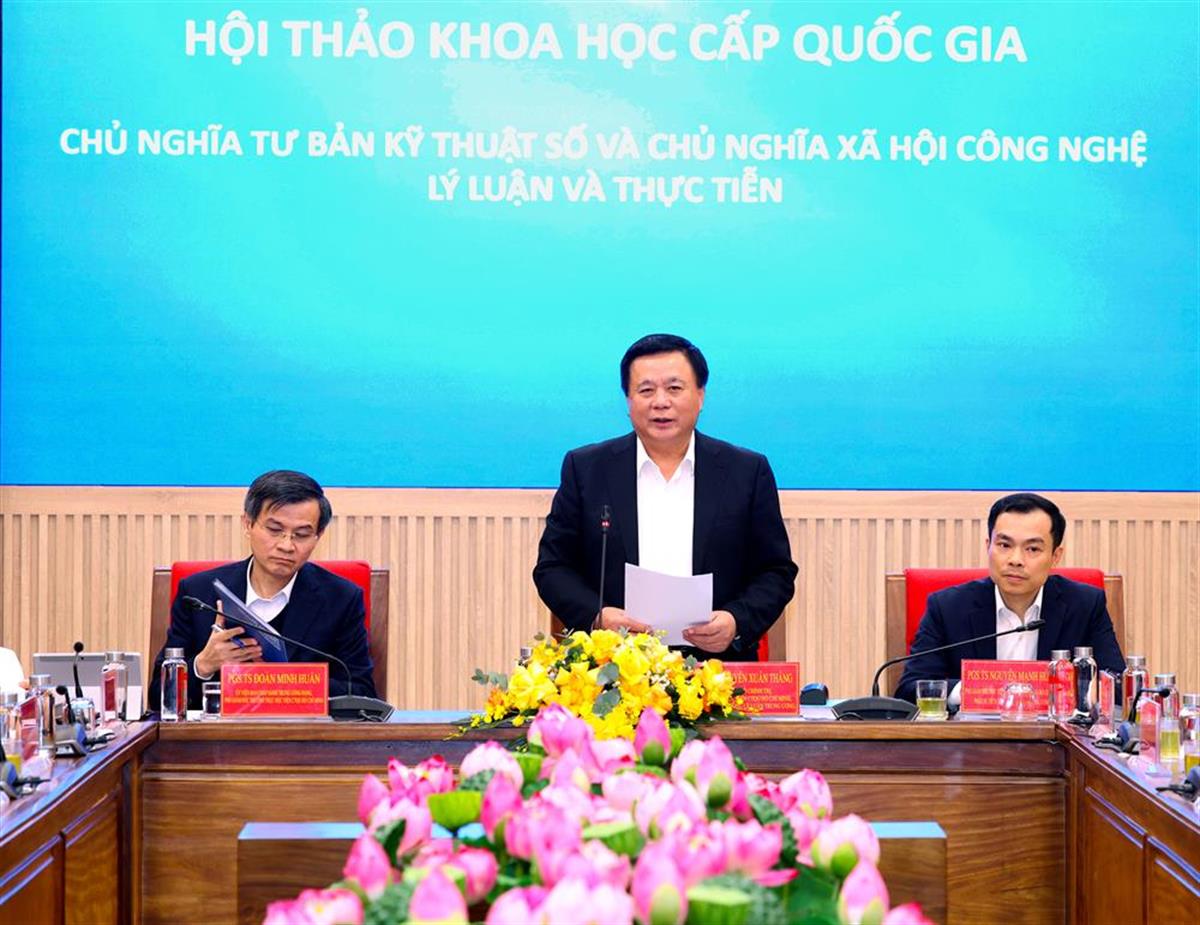
 Prof. Dr. Nguyen Xuan Thang delivered the opening remarks at the conference
Co-chairing the conference were Assoc. Prof. Dr. Doan Minh Huan, member of the Party Central Committee, Standing Vice Director of the Ho Chi Minh National Academy of Politics; and Assoc. Prof. Dr. Nguyen Manh Hung, Vice Director of the Ho Chi Minh National Academy of Politics and Vice Chairman of the Central Theoretical Council.
In his opening remarks, Prof. Dr. Nguyen Xuan Thang stated that the modern scientific and technological revolution (with digital technology, big data, artificial intelligence, the Internet of Things, intelligent automation, and super-quantum technology at its core) is fundamentally transforming the quality of productive forces, modes of production organization and distribution, and comprehensively reshaping global economic and social power structures. In this context, both capitalism and socialism are compelled to evolve, adjust, and restructure to adapt to a new level and quality of productive forces. This process has given rise to two prominent models attracting the attention of scholars worldwide: digital capitalism and technological socialism.
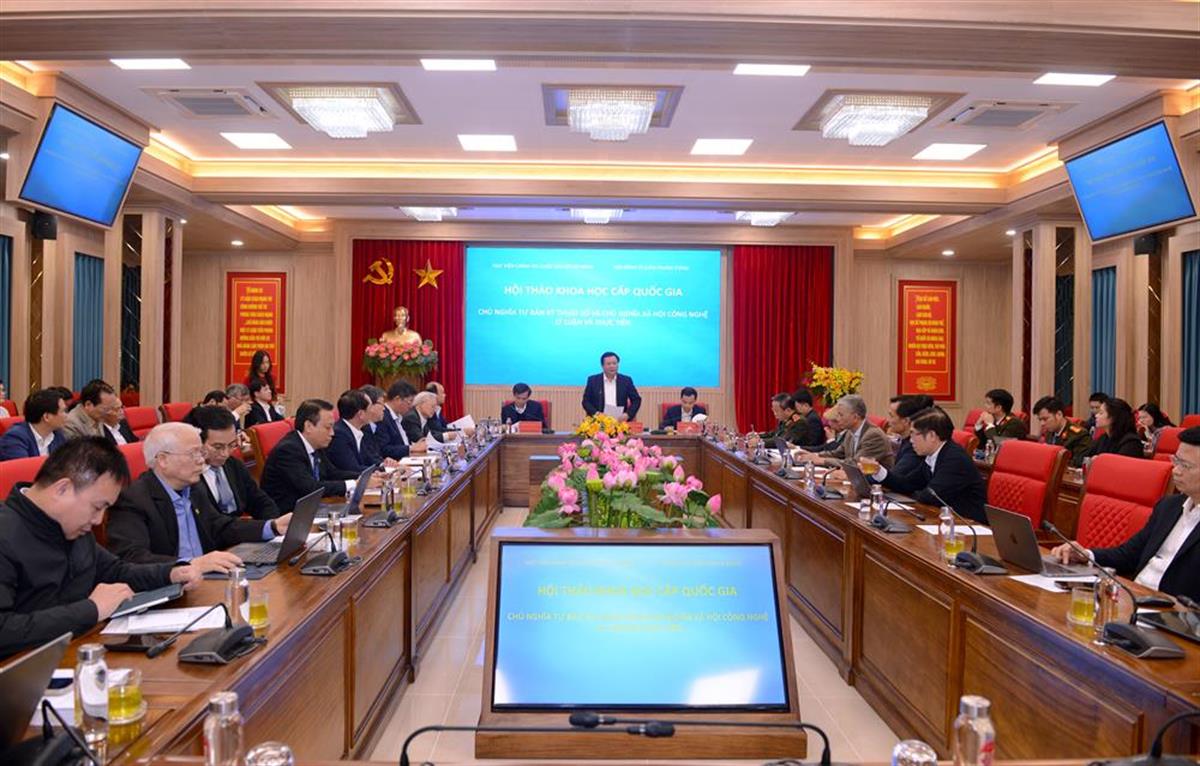 Overview of the conference
Prof. Dr. Nguyen Xuan Thang affirmed that studying and comparing these two models is of particularly important significance for Viet Nam in refining theoretical understanding of breakthroughs in science, technology, innovation, and digital transformation. This requires proactively absorbing the achievements of global science and technology while steadfastly upholding the goal of human-centered, inclusive, and sustainable development, “leaving no one behind in the process of scientific and technological development, innovation, and digital transformation,” and ensuring that digital transformation does not exacerbate inequality or erode social values.
With this significance, Prof. Dr. Nguyen Xuan Thang emphasized the special importance of the conference and expressed his confidence that it would serve as a theoretical scientific forum for delegates to exchange views and clarify the concepts, nature, characteristics, and future development of the two models—digital capitalism and technological socialism. Thereby, the conference would contribute to affirming the universal values of technological progress for the common development of humanity, while identifying fundamental differences in development goals, organizational modes, and value systems between the two models and development paths; clarifying the possibilities for integration, sharing, cooperation, and development partnerships between digital capitalism and technological socialism; emphasizing and demonstrating the advantages of socialism in the new global context; thereby making practical contributions to strategic orientation and policy formulation for national development, refining the theoretical foundations of renewal policies, and advancing theories on socialism and Viet Nam’s path toward socialism in the digital era.
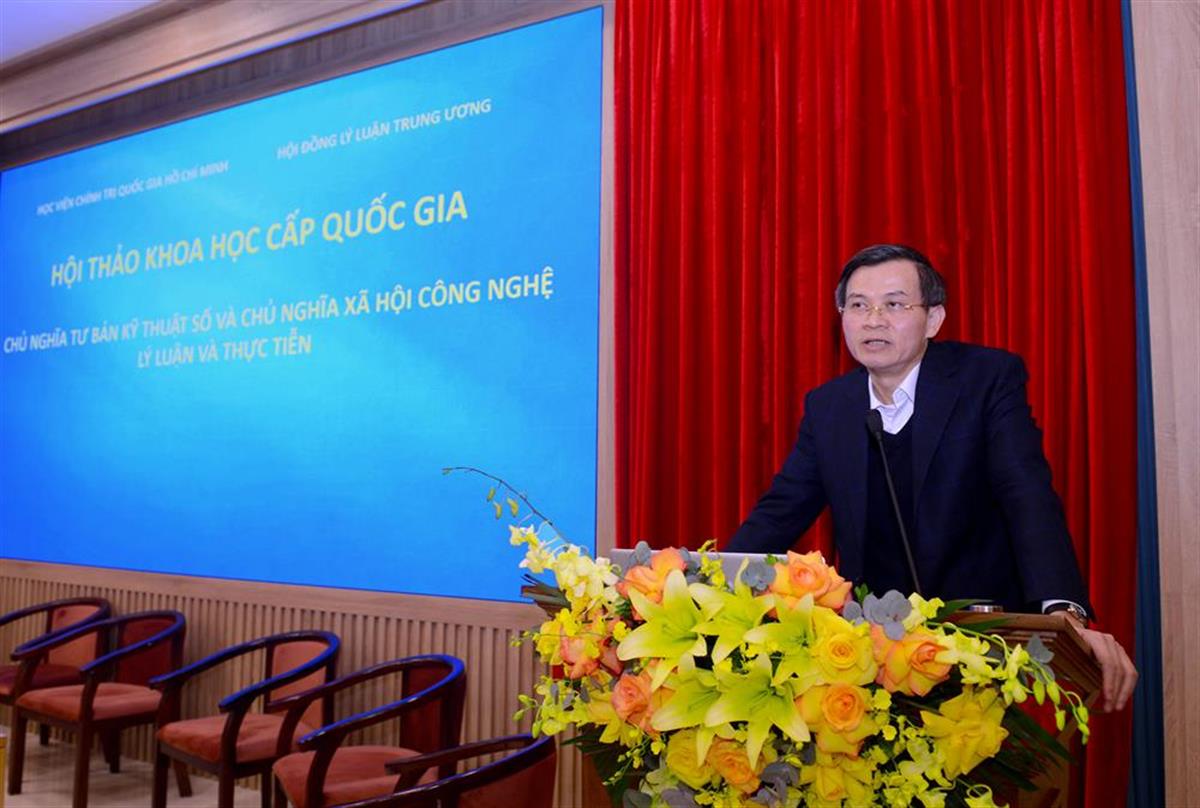 Assoc. Prof. Dr. Doan Minh Huan, Member of the Party Central Committee, Standing Vice Director of the Ho Chi Minh National Academy of Politics, delivered remarks at the conference
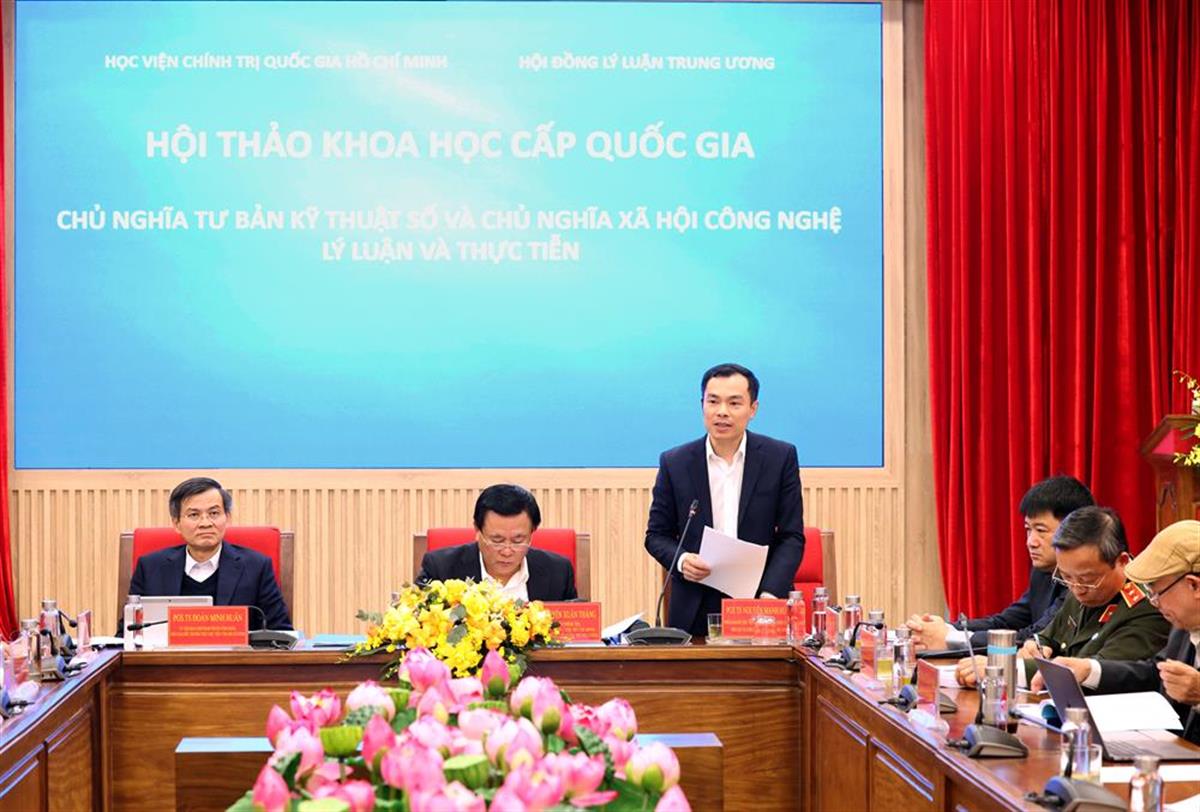 Assoc. Prof. Dr. Nguyen Manh Hung, Vice Director of the Ho Chi Minh National Academy of Politics and Vice Chairman of the Central Theoretical Council, presented a paper at the conference
At the conference, experts and scholars focused on identifying, analyzing, and interpreting the profound transformations of modern capitalism and actually existing socialism in the digital era, with particular emphasis on in-depth research, clarification, and comparison of the two prominent models of digital capitalism and technological socialism.
With a spirit of frank and creative exchange, participating delegates affirmed the particularly important significance of the conference, not only in theoretical terms but also in practical terms, in identifying the context, shaping development orientations and policies, and making substantive contributions to defining strategic thinking, vision, and major policy decisions.
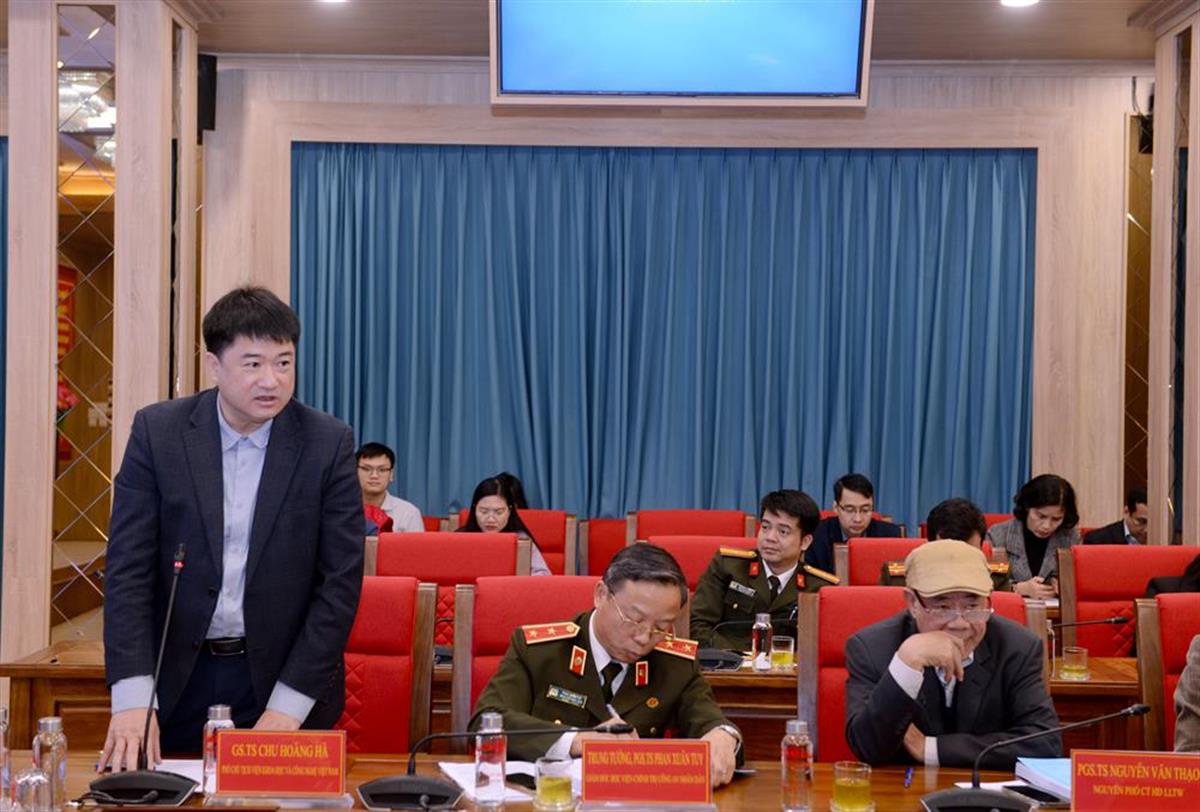 Delegates presented papers at the conference
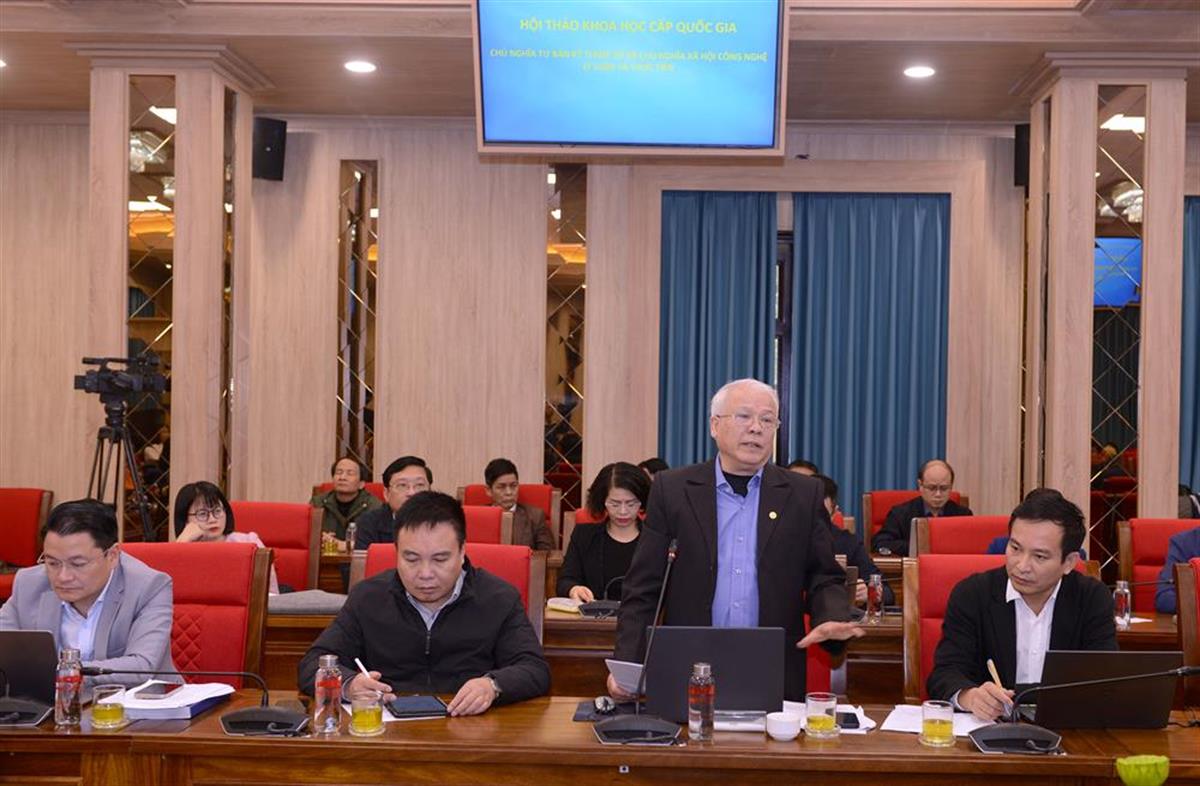 Delegates presented papers at the conference
The national-level scientific conference “Digital Capitalism and Technological Socialism – Theoretical and Practical Issues” consisted of two sessions: the first session featured presentations on the theme “Theoretical and Practical Issues of Digital Capitalism and Technological Socialism,” and the second session was a roundtable discussion on the theme “The Practical Development of Technological Socialism and Policy Orientations for Viet Nam.”
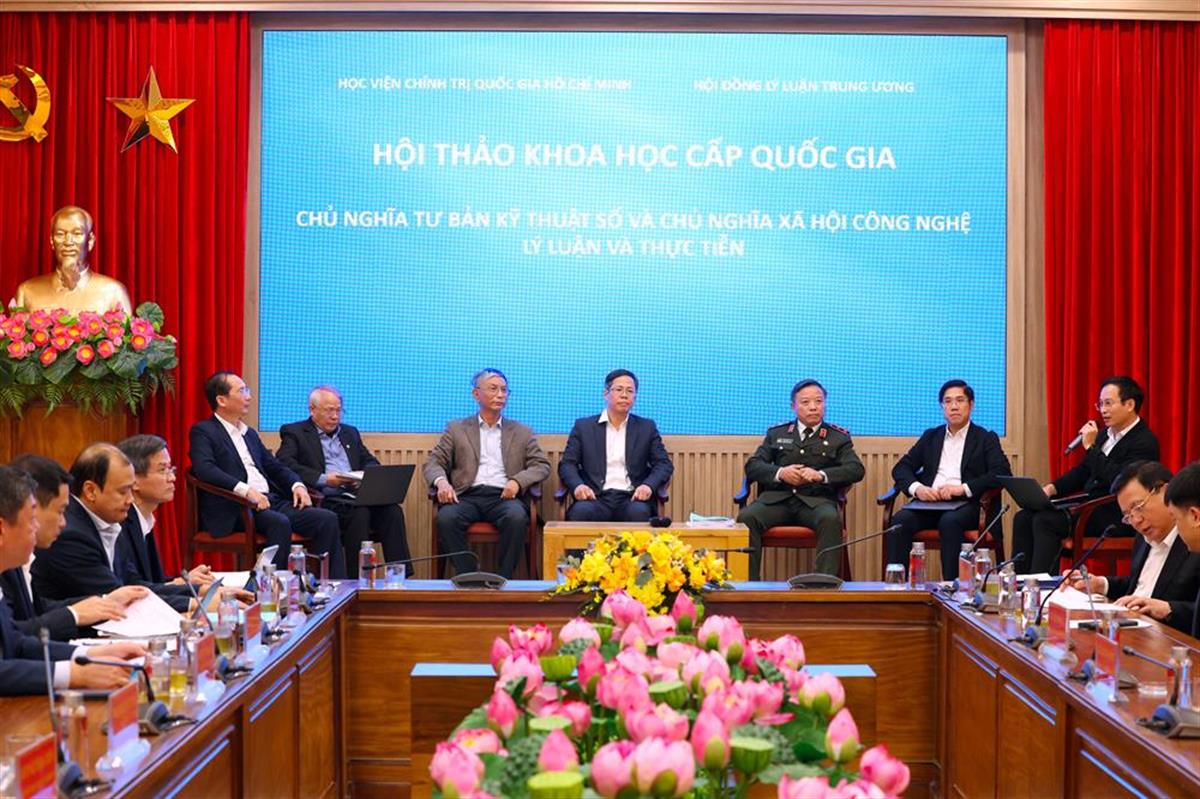 Roundtable discussion on the theme “The Practical Development of Technological Socialism and Policy Orientations for Viet Nam”
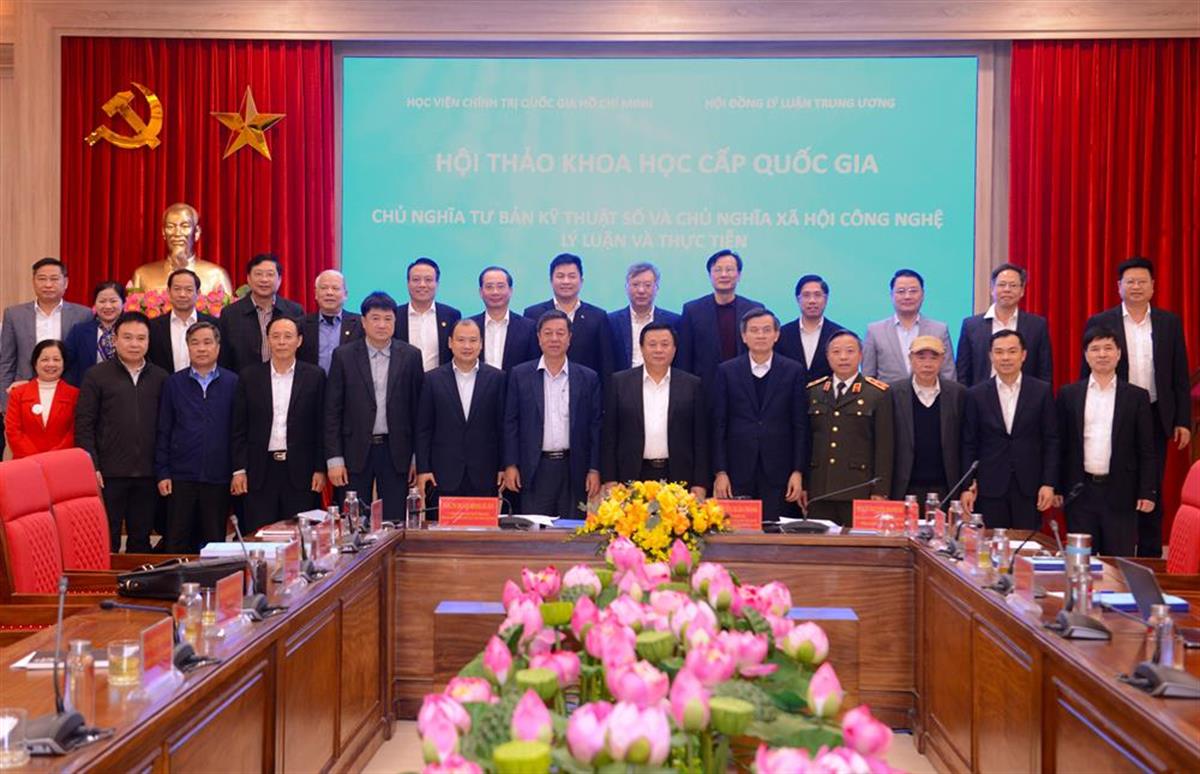 Delegates attending the conference took a commemorative photo