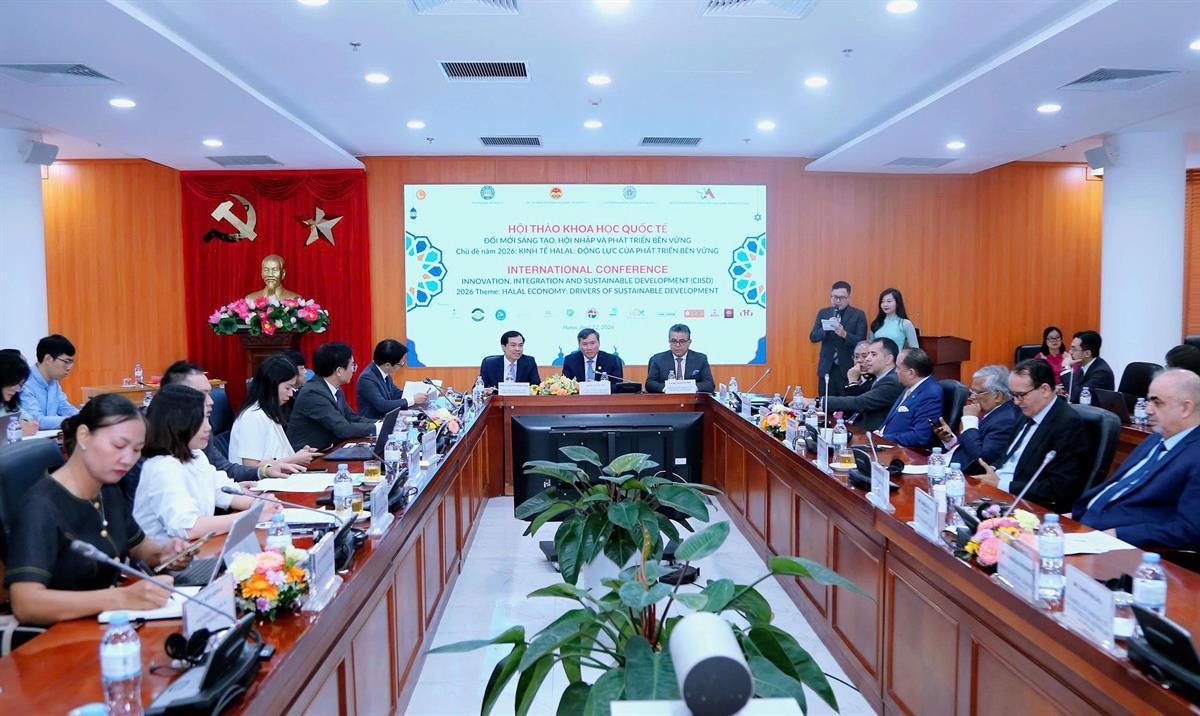
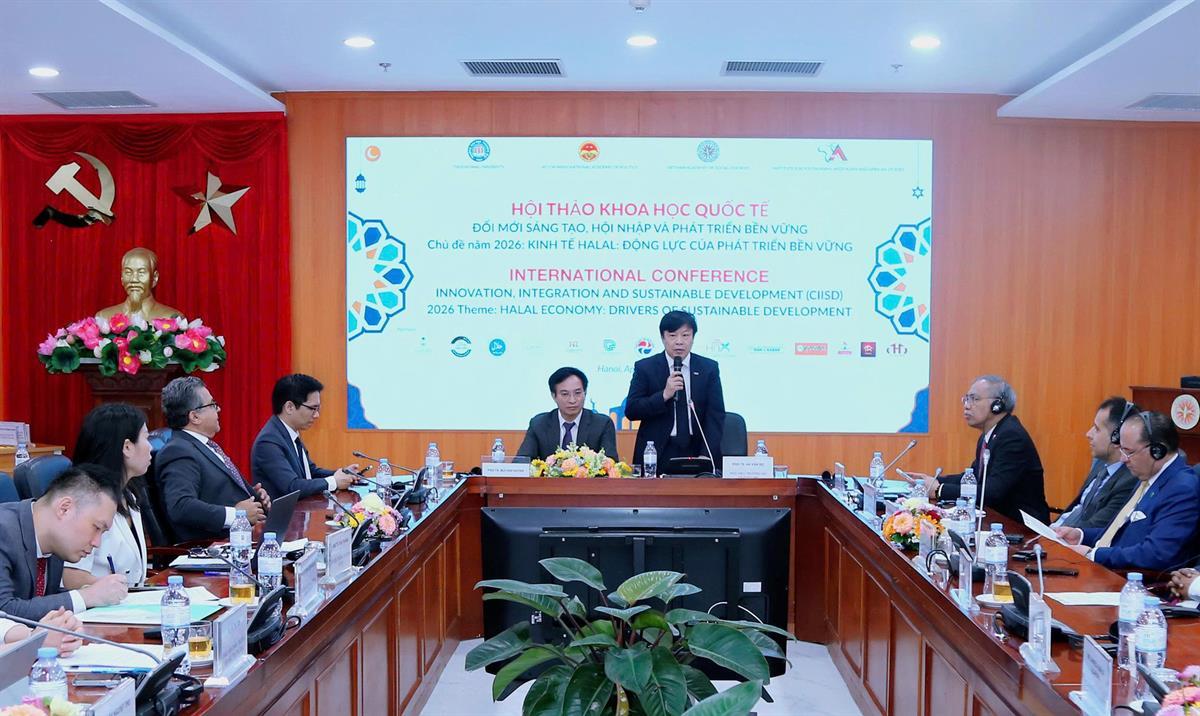
 A view of the conference
The co-chairmen of the event were Prof. Dr. Le Van Loi, member of the Party Central Committee, President of the Vietnam Academy of Social Sciences; Assoc. Prof. Dr. Nguyen Manh Hung, Vice President of the Ho Chi Minh National Academy of Politics, Vice Chairman cum General Secretary of the Central Theoretical Council; and H.E. Saadi Salama, Ambassador of the State of Palestine and head of the foreign diplomatic corps in Vietnam.
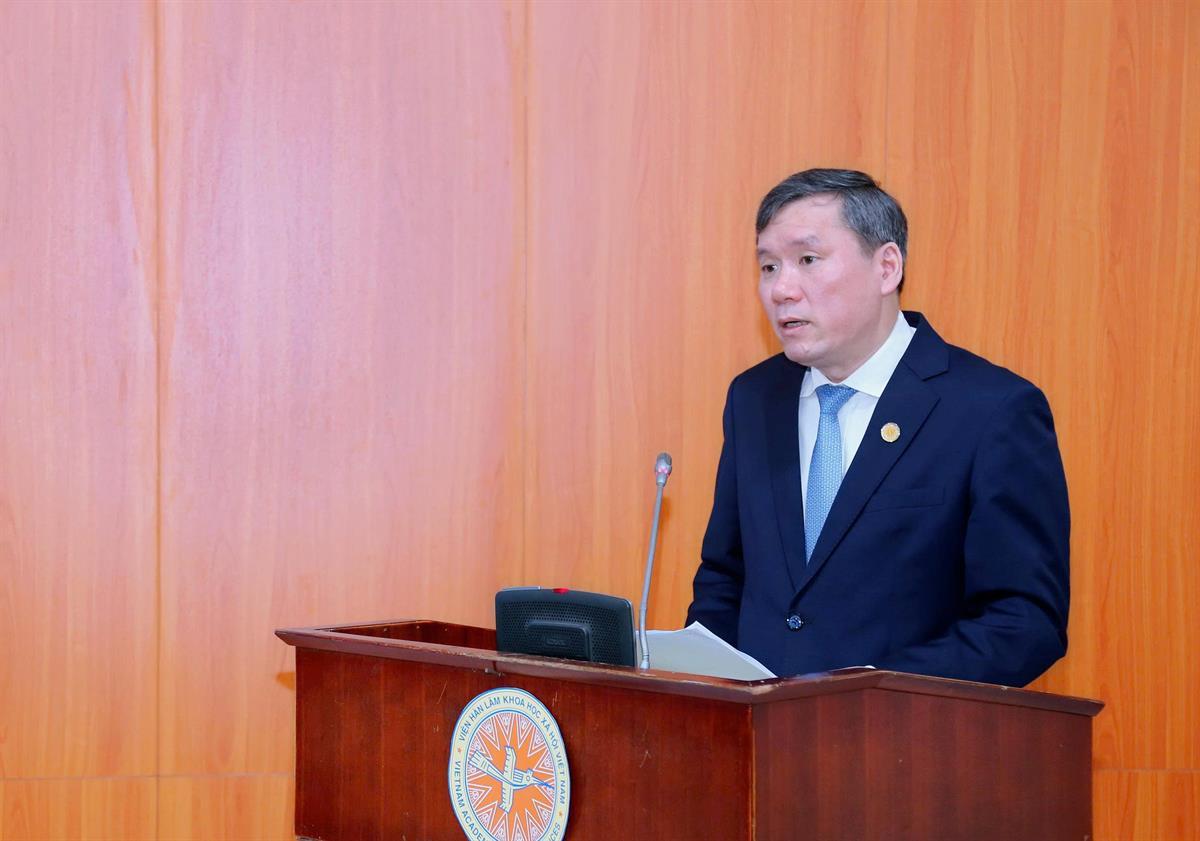 Prof. Dr. Le Van Loi, member of the Party Central Committee, President of the Vietnam Academy of Social Sciences, delivered welcoming remarks at the event
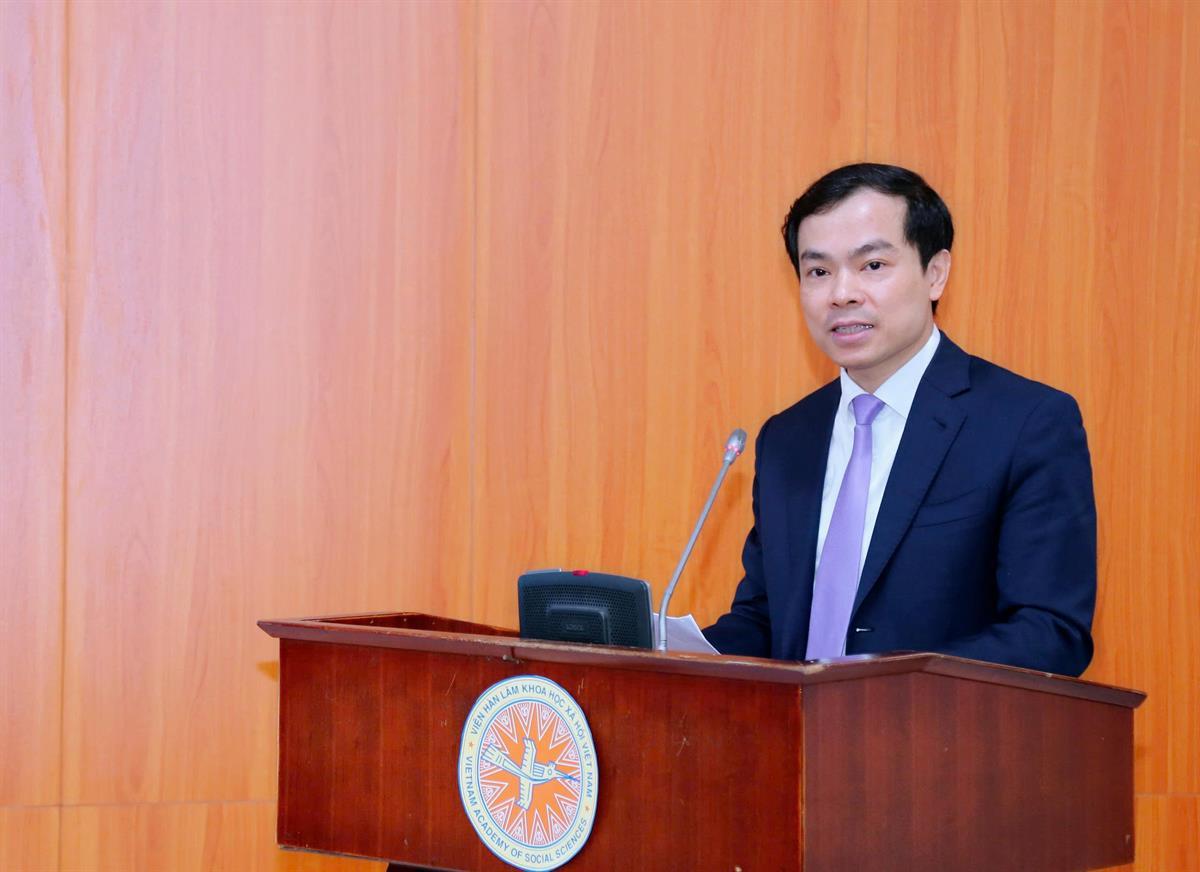 Assoc. Prof. Dr. Nguyen Manh Hung, Vice President of the Ho Chi Minh National Academy of Politics, Vice Chairman cum General Secretary of the Central Theoretical Council, made a speech at the event
Among the international guests were H.E. Adam Mulawarman Tugio, Ambassador of the Republic of Indonesia to Vietnam; H.E. Korhan Kemik, Ambassador of the Republic of Türkiye to Vietnam; H.E. Thamer M. Algosaibi, Ambassador of the Kingdom of Saudi Arabia to Vietnam; representatives of several embassies of Muslim countries in Hanoi; Mr. Mieu Abbas, Chairman of Halal Vietnam; representatives of businesses, experts, scholars, and scientists from Muslim countries such as Indonesia and Malaysia.
The Halal Economy: a springboard of sustainable development
In his welcoming remarks, Prof. Dr. Le Van Loi affirmed that the theme of the CIISD 2026 conference had a strategic vision. In the current global and regional context, finding “new pillars” and “new drivers” to ensure self-reliance and sustainable development has become a vital challenge for all nations. To realize its macroeconomic strategic goals by 2035 and vision for 2045, becoming a developed, high-income country, the Vietnamese economy needs strong breakthroughs in thinking, especially towards achieving double-digit growth during this crucial period.
According to Prof. Dr. Le Van Loi, the strength of Halal lies not only in market size or commercial profit. Halal standards—with their core principles of cleanliness, humanity, transparency, and safety—are perfectly aligned with the green consumption trend, social responsibility, and the Sustainable Development Goals (SDGs) that humanity is pursuing. This is the foundation for the Halal economy to become a springboard for sustainable development.
Prof. Dr. Le Van Loi said that having grasped this “strategic keyword”, the Vietnamese Party and State have taken decisive steps to awaken the enormous potential of the Halal market. Decision No. 10/QD-TTg, approving the plan for the development of the Vietnamese Halal industry until 2030, was issued as a strategic cornerstone. Around this cornerstone, a comprehensive legal and institutional framework has been quickly established: from the establishment of the National Halal Certification Center (HALCERT), the promulgation of national standards (TCVN) on Halal, to the development of a Decree on quality management of specialized fields. This series of efforts demonstrates a macro-level and long-term vision: to develop Halal into a comprehensive ecosystem for growth, gradually elevate Vietnam to become “an indispensable destination and a key link in the global Halal supply chain,” rather than merely focusing on the trade of individual export products.
“The development of the Halal economy needs to be placed within the overall foreign policy and international integration strategy of Vietnam”
Speaking at the conference, Assoc. Prof. Dr. Nguyen Manh Hung affirmed that the theme of the 2026 CIISD Conference was not only of academic significance but also of profound practical relevance. This theme lay at the intersection of many major issues: international integration, transformation of growth models, sustainable development, economic diplomacy, cultural understanding, and building trust among nations, communities, and civilizations.
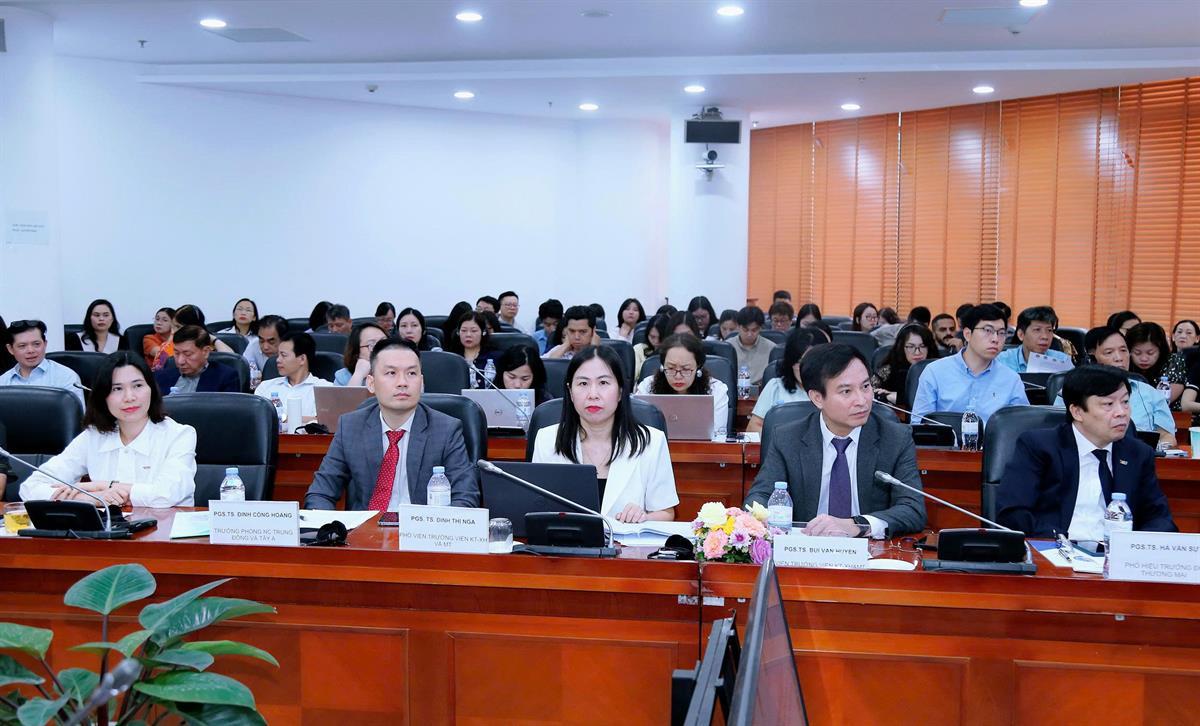 Participants of the conference
Assoc. Prof. Dr. Nguyen Manh Hung emphasized that the Halal economy was not just about trade, but also a bridge of cultural understanding and political trust. He believed that Vietnam has the important conditions to participate more deeply in the global Halal value chain. When Vietnamese businesses promote Halal economic cooperation with Islamic countries, they are not just selling goods, expanding markets, and seeking profits, but are truly entering a space for cultural exchange, where respect for the beliefs, customs, traditions, and norms of their partners is of great importance. A proper understanding of Halal also leads to a better understanding of how culture, religion, and economics are interconnected in modern international affairs.
With this significance in mind, Assoc. Prof. Dr. Nguyen Manh Hung believed that the 2026 CIISD conference would open up new perspectives, generate innovative proposals, and create new opportunities for cooperation. Moving from the Halal food to the Halal economy represents a progression in awareness. Transitioning from awareness to action is a step forward in capacity. Moving from academic discussion to policy recommendations reflects a higher level of responsibility. And moving from economic cooperation to cultural understanding, and from cultural understanding to political trust, represents a progression in vision. Through these contributions, the conference would make a meaningful contribution to shaping new thinking, policies, and actions for the development of the Halal economy in Vietnam, thereby helping the country participate more deeply, effectively, and sustainably in the global Halal value chain.
“Positioning Vietnam as an important link in the global Halal products and services supply chain”
The Halal economy, encompassing Halal-certified products and services, is increasingly recognized as a key driver of sustainable development, particularly in sectors such as food and beverages, pharmaceuticals, cosmetics, fashion and apparel, entertainment, tourism, logistics, and finance. With the global Halal economy projected to reach US$10.5 trillion by 2030, this conference serves as a prestigious and influential forum, bringing together over 150 delegates, including policymakers, ambassadors, chargés d’affaires of Muslim countries, experts, and representatives of businesses, to discuss a roadmap for Vietnam to become a key link in the global Halal product and service supply chain, contributing to the realization of Vietnam’s double-digit growth targets.
The conference was organized into two sessions: the first one entitled “International experiences and solutions for sustainable Halal economic development in the new context” and the second one entitled “Building Halal brands and accessing sustainable Halal markets: The roles of the State, researchers, and businesses.”
 Assoc. Prof. Dr. Nguyen Xuan Trung and Assoc. Prof. Dr. Bui Van Huyen co-chaired the first session
The sessions and discussions focused on addressing strategic challenges, from international experience to the practical aspects of sustainable Halal economic development, brand building, and market access for Halal products worldwide and in Vietnam. Based on these, the participants engaged in in-depth discussions on two major areas: firstly, identifying international experiences, including successful and unsuccessful lessons, pinpointing barriers, and proposing solutions for sustainable Halal economic development in the new context and secondly, building brands and establishing effective, transparent, and sustainable market access pathways for Halal products.
The first session focused on international experiences and solutions for sustainable Halal economic development in the new context, with online presentations from the Deputy Minister of the Coordinating Ministry for Human Development and Cultural Affairs of the Republic of Indonesia; from consultants from Malaysia and reputable scholars from the Institute of Economics, Society and Environment under the Ho Chi Minh National Academy of Politics, the Institute for South Asian, West Asian and African Studies under the Vietnam Academy of Social Sciences, and the University of Commerce.
The second session focused on building sustainable Halal branding and market access through collaboration among three stakeholders: the government, researchers, and businesses. It featured practical insights from speakers from RMIT University Hanoi, representatives of Halal-producing enterprises and Halal certification organizations, including Green Hanoi Cooperative and Halal Vietnam (HVN).
Speaking at the event, Mr. Korhan Kemik, Ambassador of the Republic of Turkey to Vietnam, said that today’s Halal economy was not only linked to religious requirements but was also seen as a system for ensuring quality and responsible production. Halal standards require full traceability, hygiene assurance, and integrity throughout the entire production chain, while also aligning with sustainable development goals. However, differences in standards and certifications among countries remain a barrier to trade, thus promoting mutual recognition is necessary to reduce costs and facilitate business.
---
The CIISD conference is an annual academic dialogue forum co-organized by the Institute of Economics, Society and Environment under the Ho Chi Minh National Academy of Politics, the Institute for South Asian, West Asian and African Studies under the Vietnam Academy of Social Sciences, and the Vietnam University of Commerce. This annual forum was established with the aim of exchanging scientific knowledge and discussing policies for sustainable national development in the context of a rapidly changing and unpredictable world./.