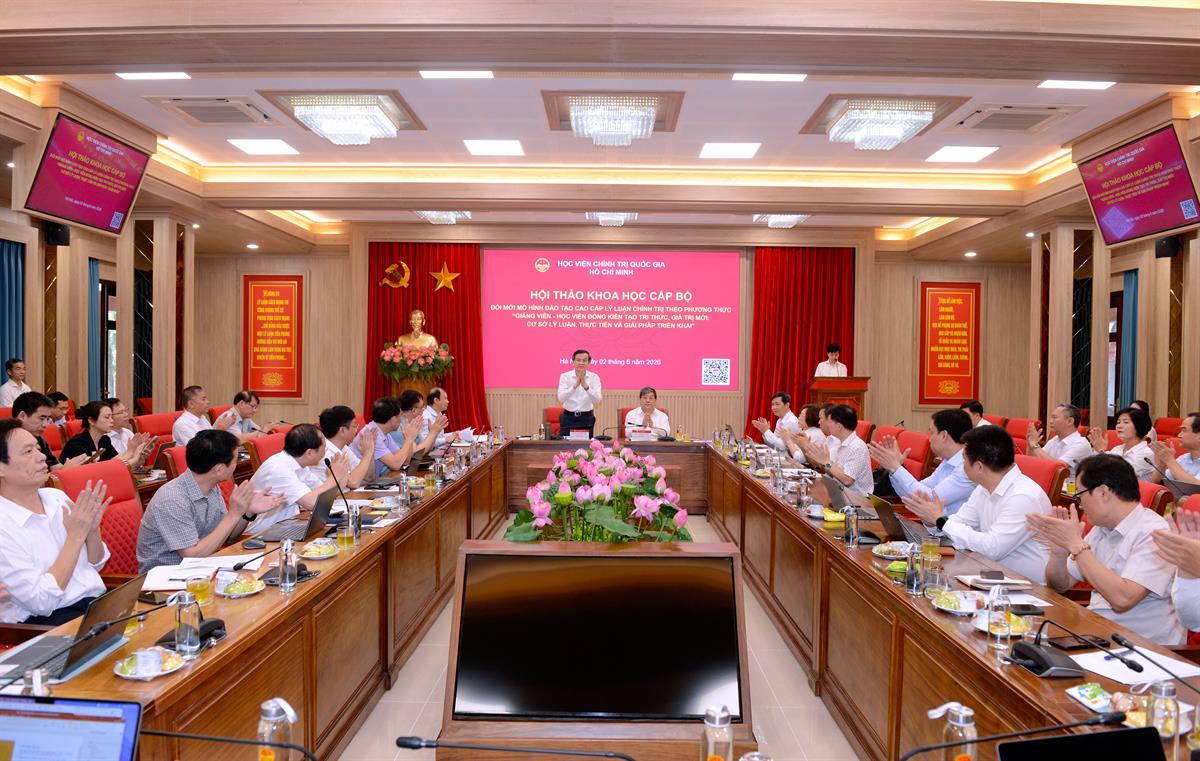
 Overview of the conference
In his opening and introductory remarks, Assoc. Prof. Dr. Doan Minh Huan emphasized that the conference focused on a major issue of great significance to the Academy’s ongoing reform of cadre training and development in the new context. He stressed the need to clearly define learning outcomes, ensuring that political theory education goes beyond knowledge acquisition and is effectively transformed into methods and tools for addressing practical leadership and management challenges.
Affirming the distinctive characteristics of Party school learners, who already possess substantial knowledge, professional experience, and practical exposure, Assoc. Prof. Dr. Doan Minh Huan noted that training should not merely supplement and update knowledge. Instead, it should aim to renew thinking, enhance cognitive capacity, and restructure practical experience, thereby enabling learners to transform experience into a resource for innovation, stronger leadership and management capacity, and greater adaptability to increasingly demanding practical requirements. From this perspective, reforming the training model by moving from one-way knowledge transmission to a model in which lecturers and learners jointly create new knowledge and values has become an urgent requirement for the Academy in the current period.
According to Assoc. Prof. Dr. Doan Minh Huan, in response to new development demands, the Academy must continue to think deeply and boldly reform its training model while redefining the roles, functions, and positions of both instructors and learners in the educational process. He particularly highlighted the rapid development of artificial intelligence (AI), which is significantly reducing the effectiveness of traditional teaching methods that rely primarily on lecturing. This development creates an urgent need to transition toward a more flexible, modern, and adaptive training model. In this process, AI should be appropriately utilized to support teaching and learning, lecturer–learner relationships should be transformed to promote greater interaction and co-creation, classroom-based instruction should be reduced, and experiential and practical learning should be expanded.
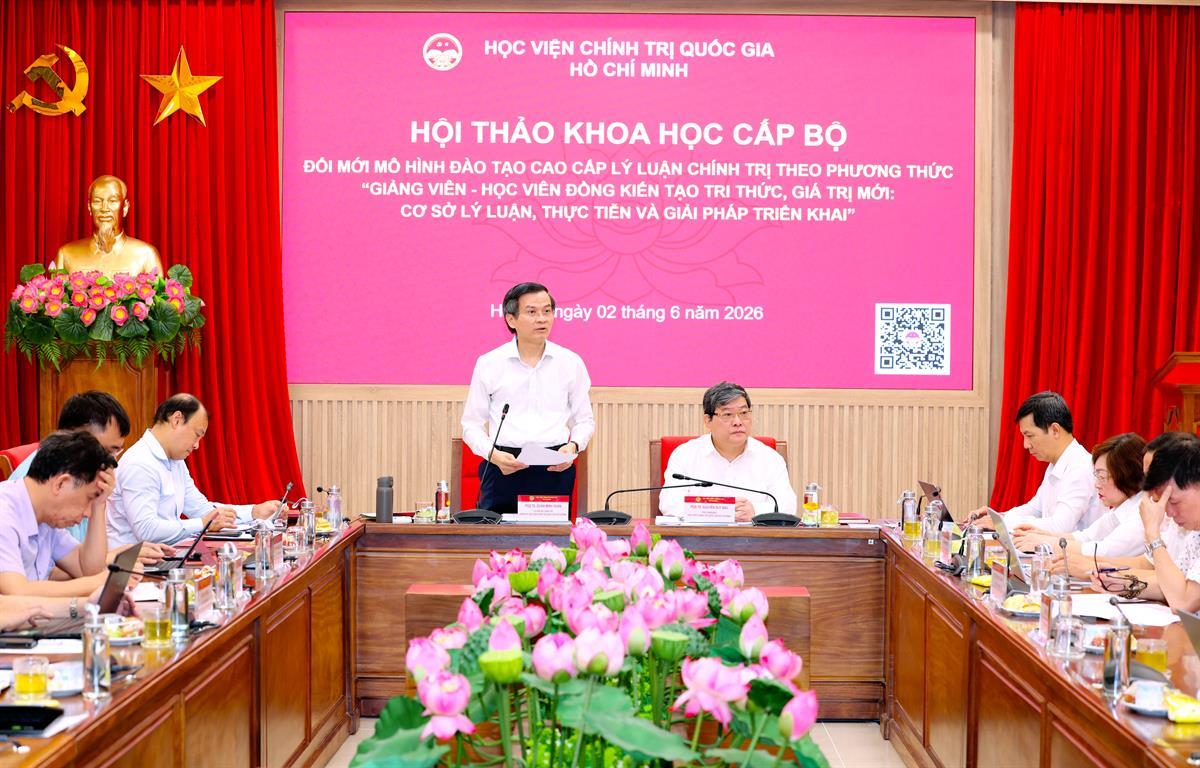 Assoc. Prof. Dr. Doan Minh Huan, Member of the Politburo and President of the Ho Chi Minh National Academy of Politics, delivered the opening and introductory remarks
On this basis, the Member of the Politburo and President of the Academy particularly emphasized the need to establish “scenario-based training grounds” in cadre education, viewing them as practical training environments where learners can actively engage in self-learning, self-research, and problem-solving. Such an approach would transform the training process into a genuinely experiential educational process. This also requires redefining the role of lecturers, who must serve not only as knowledge providers but also as coaches, facilitators, and designers of learning experiences.
Alongside reforms in teaching methodology, Assoc. Prof. Dr Doan Minh Huan pointed out that assessment and evaluation methods must also be comprehensively reformed to accurately reflect learners’ ability to apply theory and address practical situations. In this regard, the design and organization of training scenarios must be conducted systematically so that the learning process truly becomes a process of co-creating knowledge.
Providing orientation for discussions, Assoc. Prof. Dr Doan Minh Huan requested that participants focus on perspectives, directions, and solutions to concretize the Academy’s training model reform. Discussions should contribute to developing proposals tailored to the characteristics of each specialized institute, thereby narrowing the gap between theory and practice. At the same time, participants were encouraged to propose solutions to ensure that political theory subjects genuinely serve as ideological foundations linked to action and capable of meeting the increasingly demanding requirements of leadership and management practice in the new context.
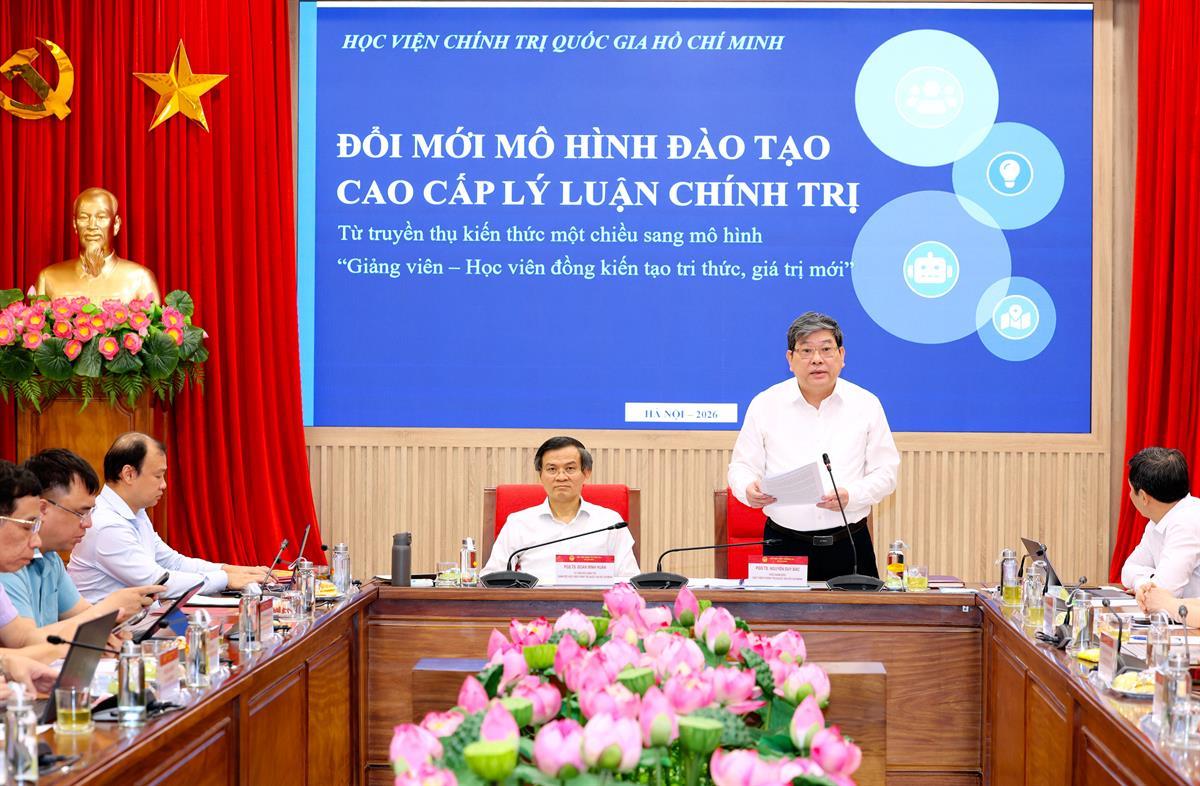 Assoc. Prof. Dr. Nguyen Duy Bac, Vice President of the Academy, presented the project proposal
At the conference, Assoc. Prof. Dr. Nguyen Duy Bac, Vice President of the Academy, presented the key contents of the project entitled “Reforming the Advanced Political Theory Training Model from One-Way Knowledge Transmission to a Model of ‘Lecturers and Learners Co-Creating Knowledge and New Values.’” He clarified the theoretical and practical foundations of the project, as well as its major orientations for transforming the Academy’s training model. The objective of this reform is not limited to providing knowledge but aims to develop a comprehensive set of modern governance competencies for cadres to meet new leadership and management requirements.
The central feature of the project is the transformation from a traditional training model based on one-way knowledge transmission to a model in which lecturers and learners jointly create new knowledge and values. Under this approach, learners are recognized as active subjects in the training process, bringing their experiences, data, and practical challenges into the classroom to work with lecturers in analyzing issues, engaging in dialogue, theorizing practical experience, and applying theory to real-world contexts. The new model is built upon political theory as its foundation, practical scenarios as its training environment, real-world experience as its learning material, and public value as the guiding standard throughout the educational process.
The project also emphasizes the use of AI as a supporting tool for preparing learning materials, analyzing data, simulating debates, and facilitating learning activities. However, human beings remain the decisive factor and bear ultimate political responsibility throughout the training process. In addition, assessment methods are intended to shift significantly from testing knowledge reproduction to evaluating competencies through learning outcomes, implementation plans, and post-training application effectiveness. The implementation of the project is planned through a phased roadmap, including preparation, pilot implementation, expansion, institutionalization, and standardization of regulations, thereby ensuring feasibility and effectiveness.
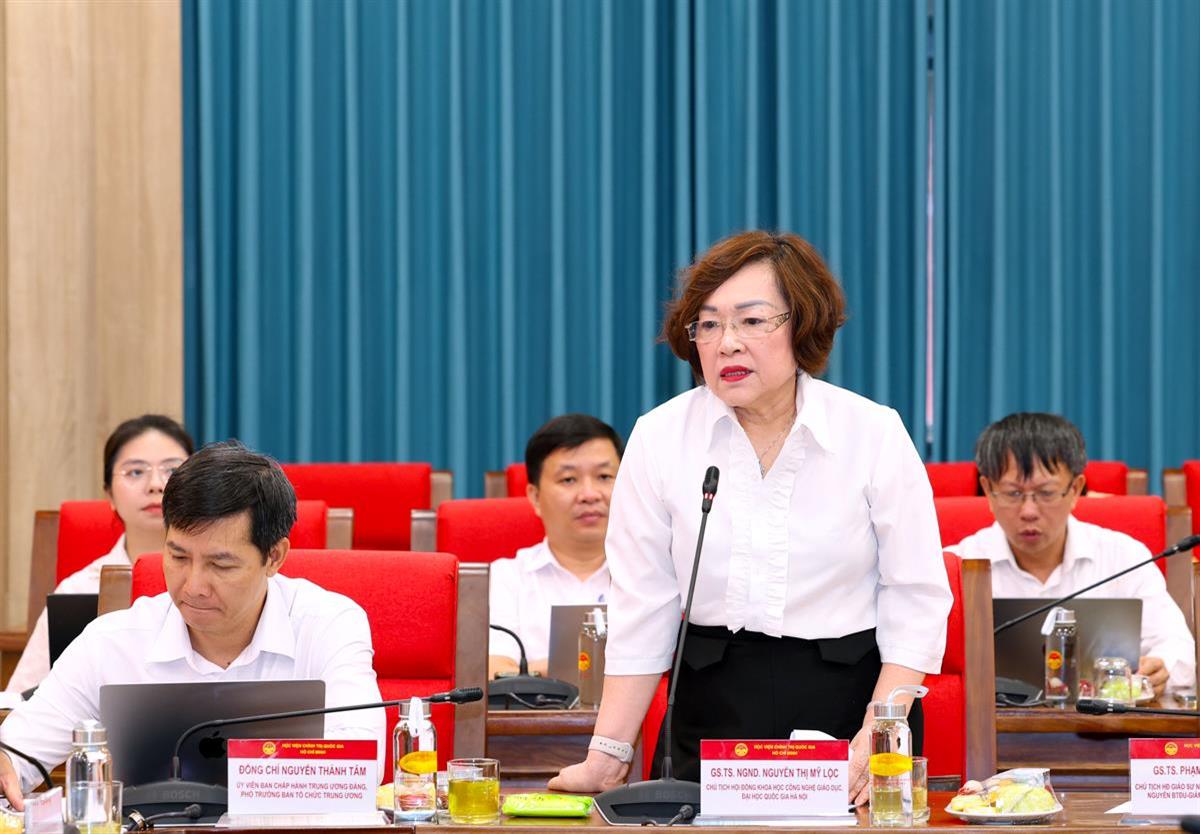 Delegates shared views at the conference
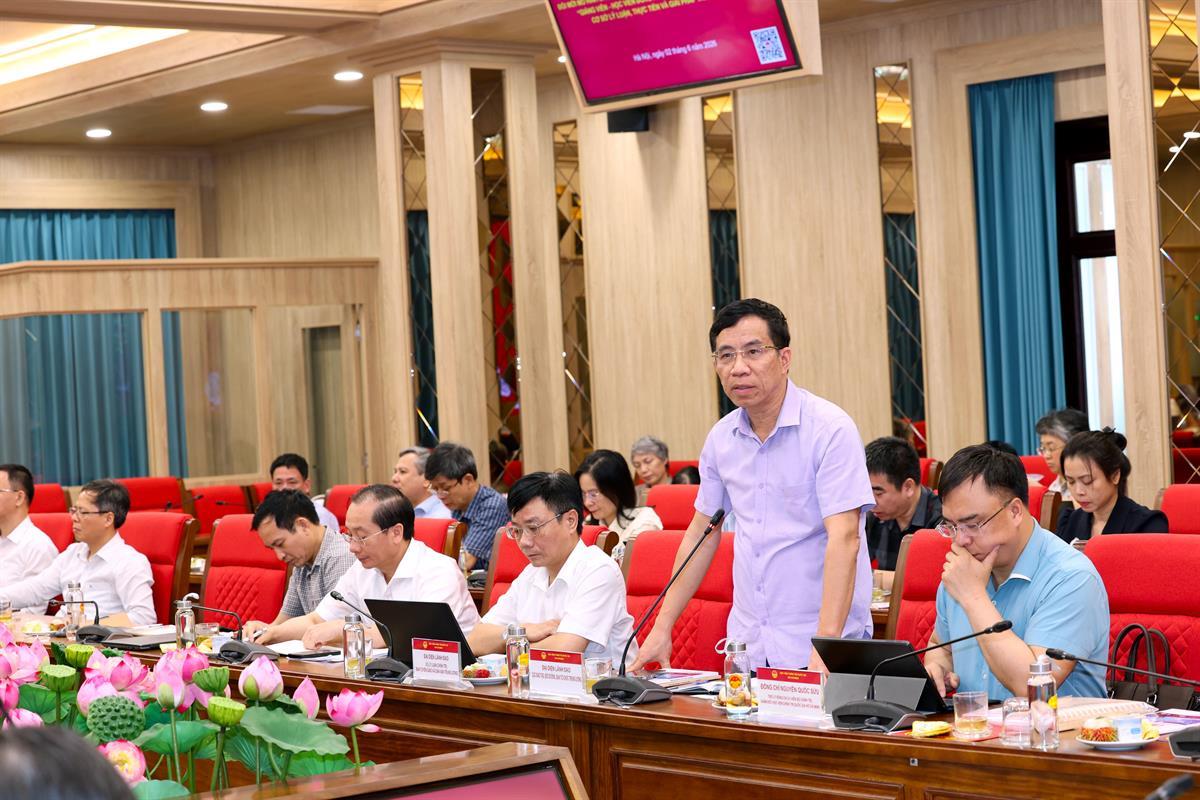 Delegates shared views at the conference
During the conference, participants engaged in extensive discussions on reforming the training model according to the philosophy of “co-creating knowledge.” There was broad consensus on the need to move away from passive knowledge transmission and toward active interaction between lecturers and learners, placing learners at the center of the educational process while maximizing the rich practical experience of leadership and management cadres in order to transform theory into practical action capacity.
Many delegates argued that to realize this model, greater emphasis should be placed on case-study-based learning, which serves as a key tool for developing analytical skills, problem-solving abilities, strategic thinking, and decision-making competencies in leadership and management activities. In addition to utilizing real-world cases, participants proposed developing a high-quality case bank that is diverse, up-to-date, and closely aligned with emerging practical issues. They also recommended designing simulation scenarios and future-oriented forecasting exercises to enhance adaptability in the face of increasingly rapid changes in modern governance environments.
The application of artificial intelligence and the development of a digital learning ecosystem were widely regarded as inevitable trends that can contribute to reforming teaching methods, supporting personalized learning, improving instructional design, and enhancing educational management. However, participants also emphasized that AI is merely a supporting tool and cannot replace the central role of learners and educators. Therefore, technological applications must be implemented appropriately and under careful supervision to ensure political orientation, scientific rigor, and the objectives of cadre training in the new era.
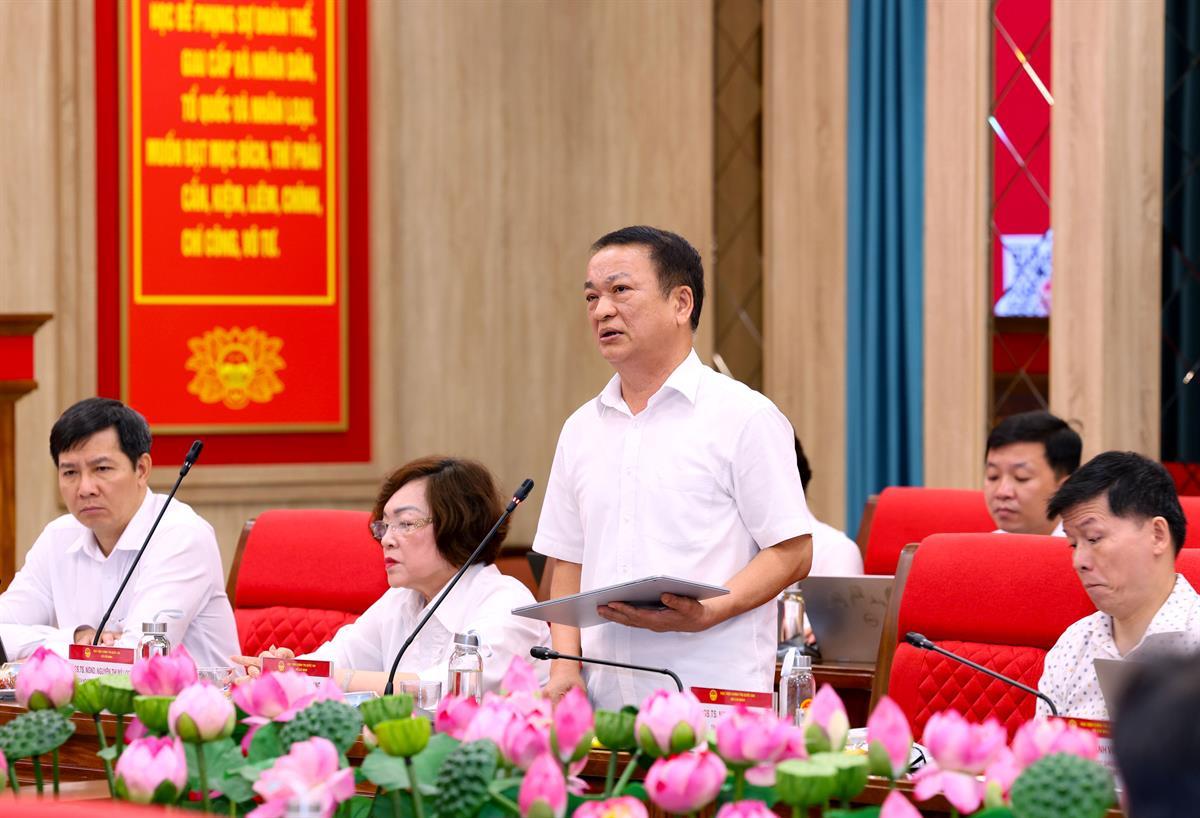 Delegates shared views at the conference
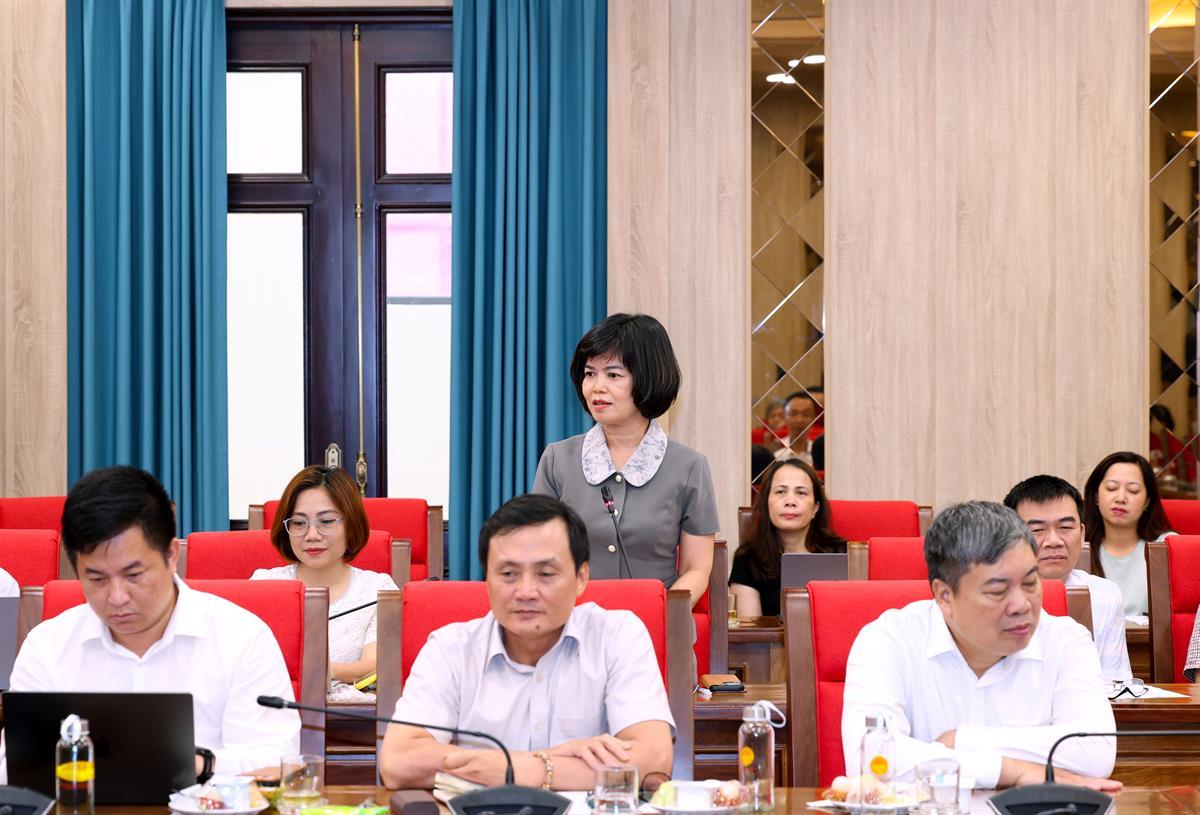 Delegates shared views at the conference
Participants also identified several challenges in implementing the new training model, including resistance to innovation, inconsistencies in developing case-study systems, the risk of weakening theoretical content if practical storytelling is overemphasized, limitations in training duration, infrastructure constraints, and insufficient capacity among some lecturers to conduct training using new methodologies. Consequently, delegates stressed the importance of further strengthening the theoretical foundation, developing a comprehensive digital training ecosystem, and building high-quality learning resources and case-study banks.
In addition, participants proposed synchronously reforming supporting conditions, including learning outcome frameworks and assessment methods designed to measure practical application and problem-solving capacity. They also recommended establishing continuous and long-term learner competency profiles rather than relying solely on the results of individual courses. At the same time, greater investment should be made in infrastructure, flexible learning environments, group learning opportunities, and experiential activities, alongside continued efforts to enhance lecturers’ ability to design and facilitate practical scenarios.
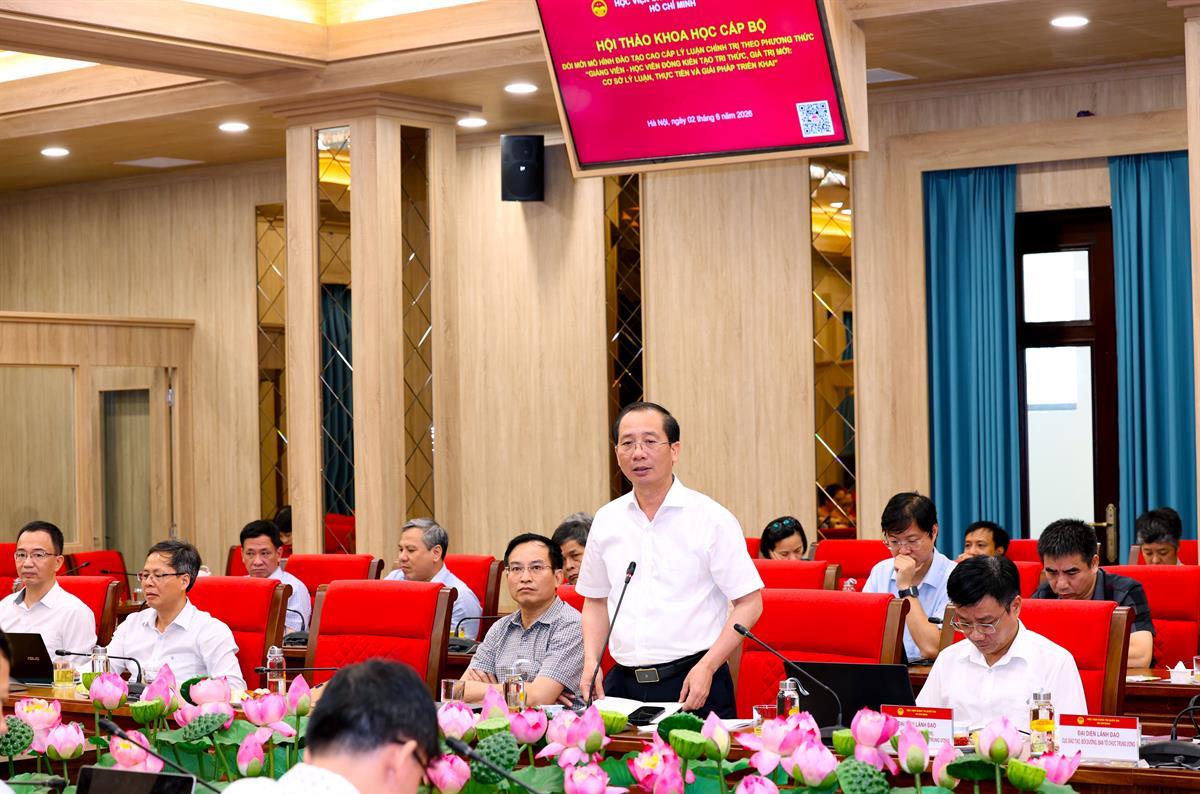 Delegates shared views at the conference
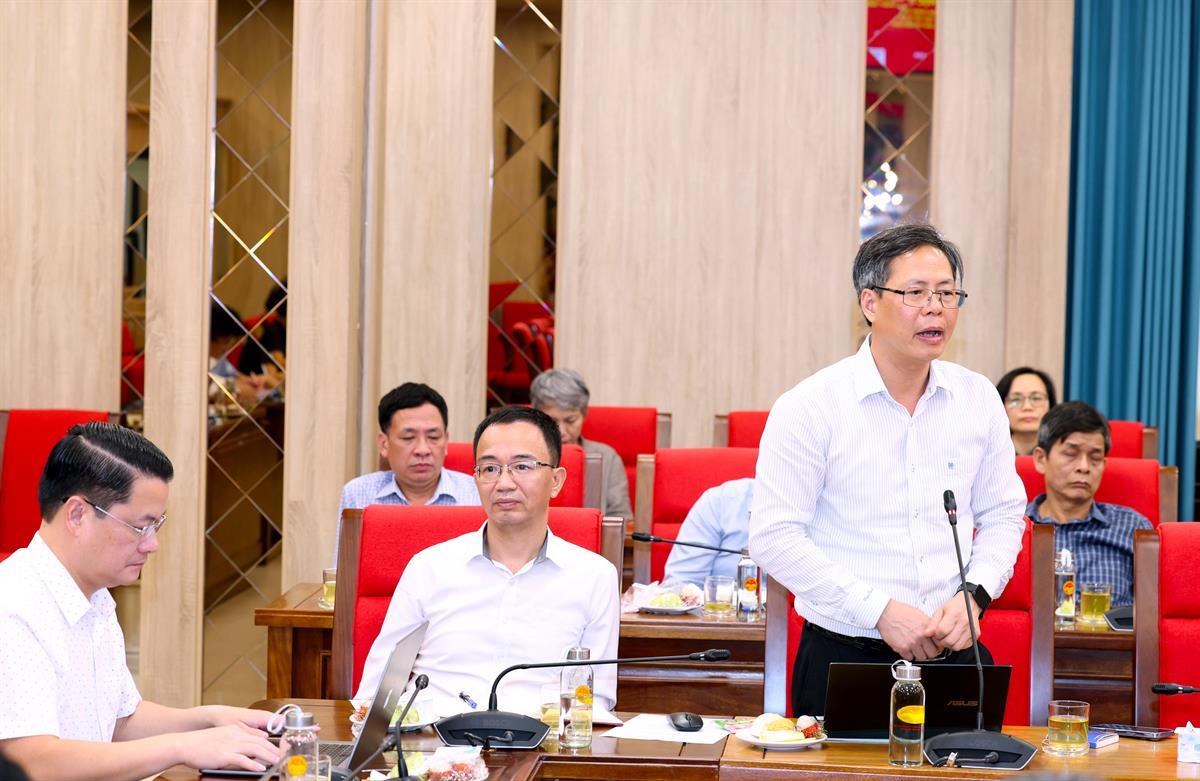 Delegates shared views at the conference
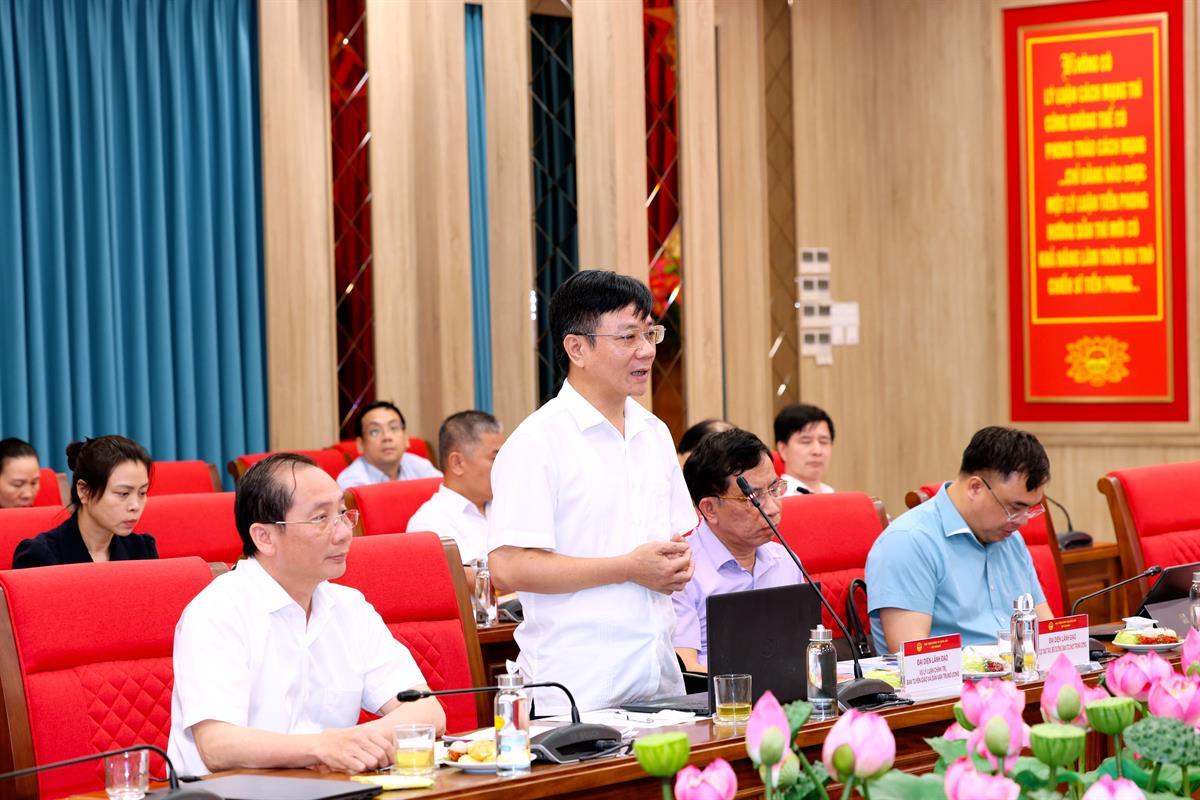 Delegates shared views at the conference
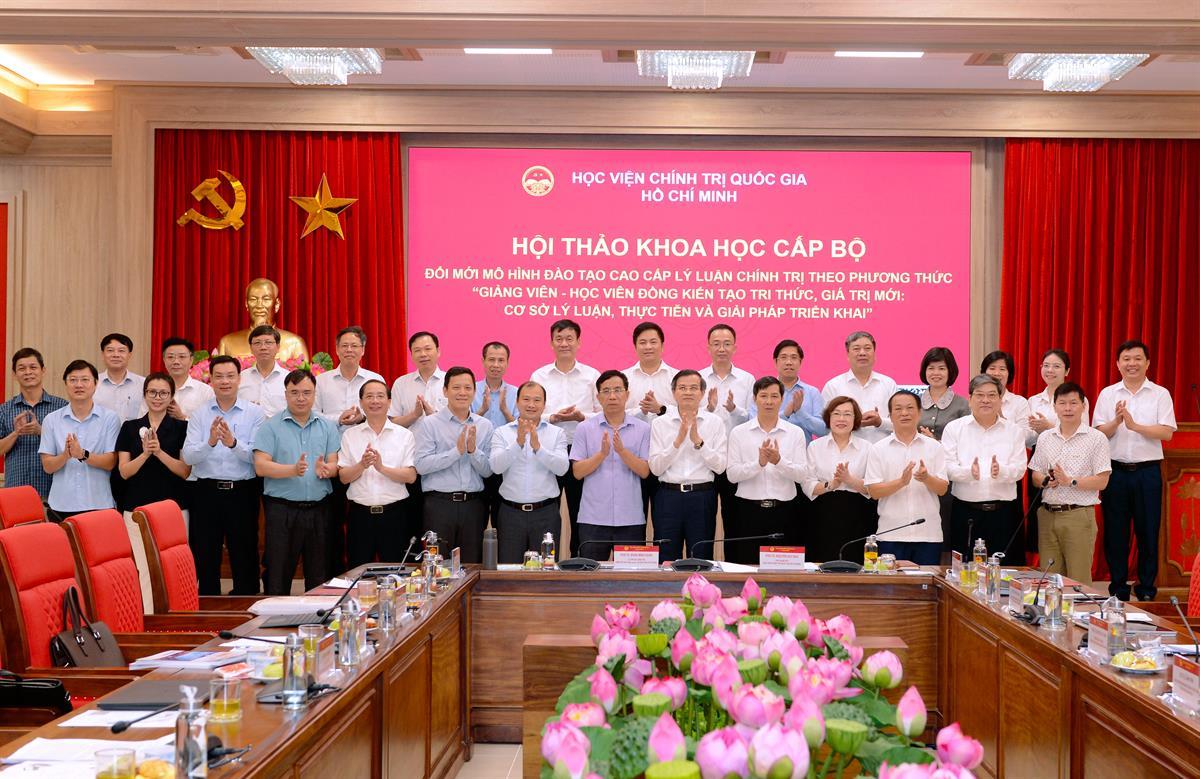 Delegates took a commemorative photo