On July 11, 2026, the Institute of Political Economy, in coordination with the People’s Committee of Ta Van Commune, Lao Cai Province, organized a scientific seminar on the theme: “Sustainable Community-Based Tourism Development at Cat Cat Tourism Site, Ta Van Commune, Lao Cai Province: Governance Practices, Cultural Preservation, and Co-Creation of Value toward Social Welfare and Inclusive Growth.”
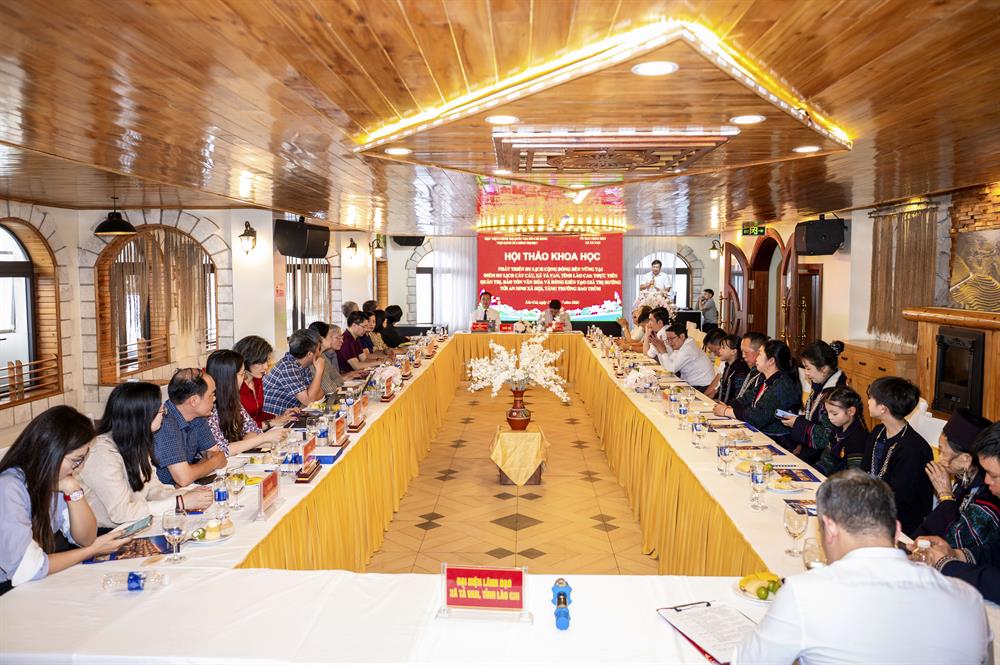
Scene of the seminar
The seminar was one of the activities undertaken to concretize the research tasks of the project entitled “Sustainable Community-Based Tourism Model in Cat Cat Village, Ta Van Commune, Lao Cai Province: Policy Implications and Recommendations for Linking Tourism Development with Social Welfare, Cultural Preservation, and Inclusive Growth in Ethnic Minority Areas,” under the 2026 policy research support program of the Australia-Vietnam Center.
The seminar was co-chaired by Assoc. Prof. Dr. Nguyen Ngoc Toan, Director of the Institute of Political Economy, and Mr. Cao Ba Quy, Deputy Secretary of the Party Committee and Chairman of the People’s Committee of Ta Van Commune.
In his introductory remarks, Dr. Ta Thi Doan, Head of the research project, stated that, in the context of Vietnam’s pursuit of a model of rapid, sustainable, and inclusive development, community-based tourism is an important policy instrument for promoting local internal strengths, preserving cultural identity, creating sustainable livelihoods, and improving people’s quality of life, particularly in ethnic minority areas. Accordingly, a sustainable community-based tourism model must be built on the foundations of effective governance, meaningful community participation, and mechanisms for co-creating value among the State, businesses, local people, and tourists. Only when communities genuinely become subjects of the development process, participate in decision-making, jointly create value, and fairly benefit from such value can community-based tourism become a driver of inclusive development, contributing to social welfare and the sustainable preservation of indigenous cultural values.
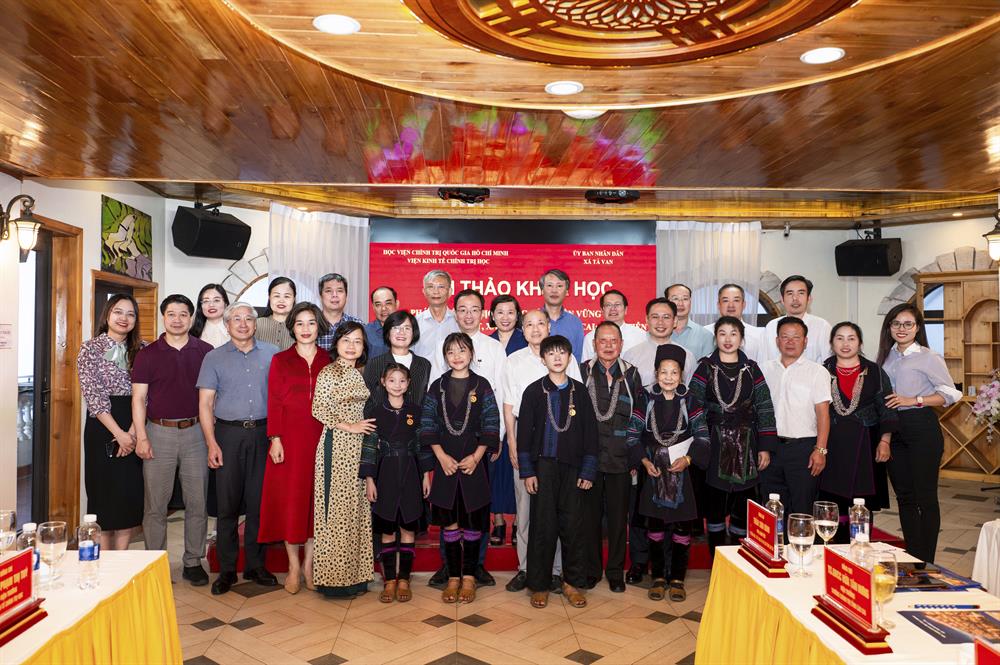
Delegates taking a group photo at the seminar
Through presentations by scholars, managers, businesses, and representatives of the local community, the seminar focused on discussing a wide range of issues of profound theoretical and practical significance. The presentations clarified the theoretical foundations of sustainable community-based tourism development; analyzed the current state of destination governance at Cat Cat; assessed the roles of different stakeholders in preserving and promoting ethnic cultural identity; shared international experience in developing community-based tourism along value chains; and discussed solutions for improving institutions, innovating governance models, strengthening community participation, promoting gender equality, developing livelihoods, and ensuring a harmonious distribution of benefits among the State, businesses, and local people. In particular, presentations by local leaders, businesses, and artisans provided vivid evidence from the actual development of community-based tourism at Cat Cat, thereby contributing important arguments to the research project.
In his concluding remarks, Assoc. Prof. Dr. Nguyen Ngoc Toan affirmed that the presentations and discussions had provided important scientific and practical arguments, contributing to clarifying both theoretical issues concerning sustainable community-based tourism development and practical issues arising at Cat Cat tourism site, Ta Van Commune, Lao Cai Province. He emphasized that the research findings not only seek to address specific local issues but also contribute to developing a reference model and a system of policy recommendations grounded in scientific evidence, feasible, and capable of replication for community-based tourism development in ethnic minority areas of Vietnam.
The outcomes of the seminar will be reviewed, synthesized, and distilled by the research project team to finalize the policy research project, while providing additional scientific and practical arguments for advising on, formulating, and implementing policies for sustainable community-based tourism development linked with cultural preservation, social welfare, and inclusive growth. This will also provide an important basis for proposing destination governance models, mechanisms for co-creating value, and policy recommendations that can be applied and replicated in ethnic minority and mountainous areas of Vietnam.
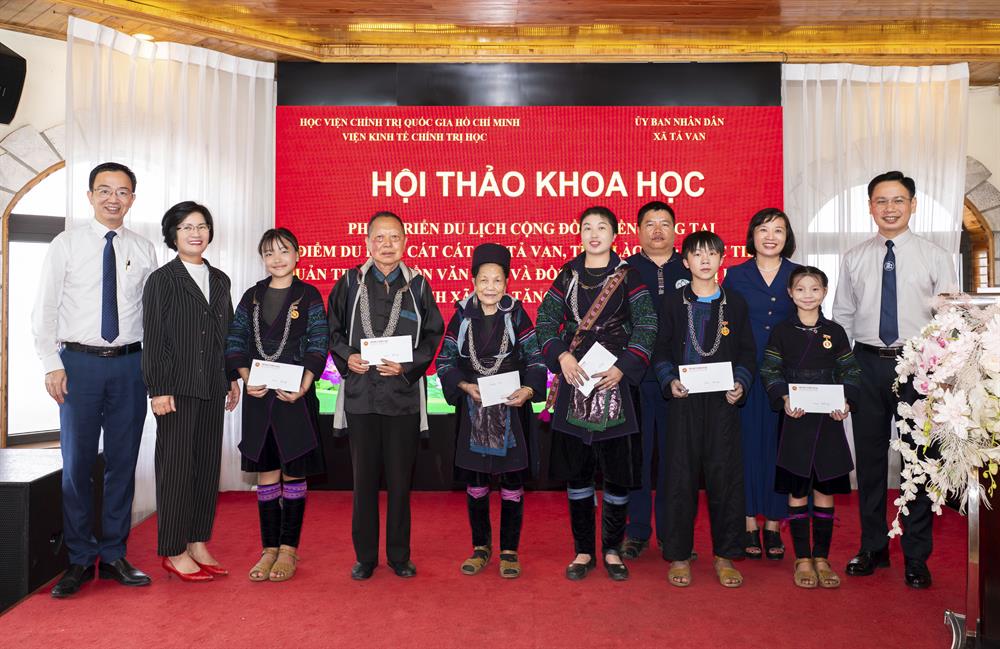
The delegation presenting gifts to encourage outstanding artisans and students of Cat Cat Village
Institute of Political Economy
Translator: Hoang Lan/Proofreader: Viet Nga